
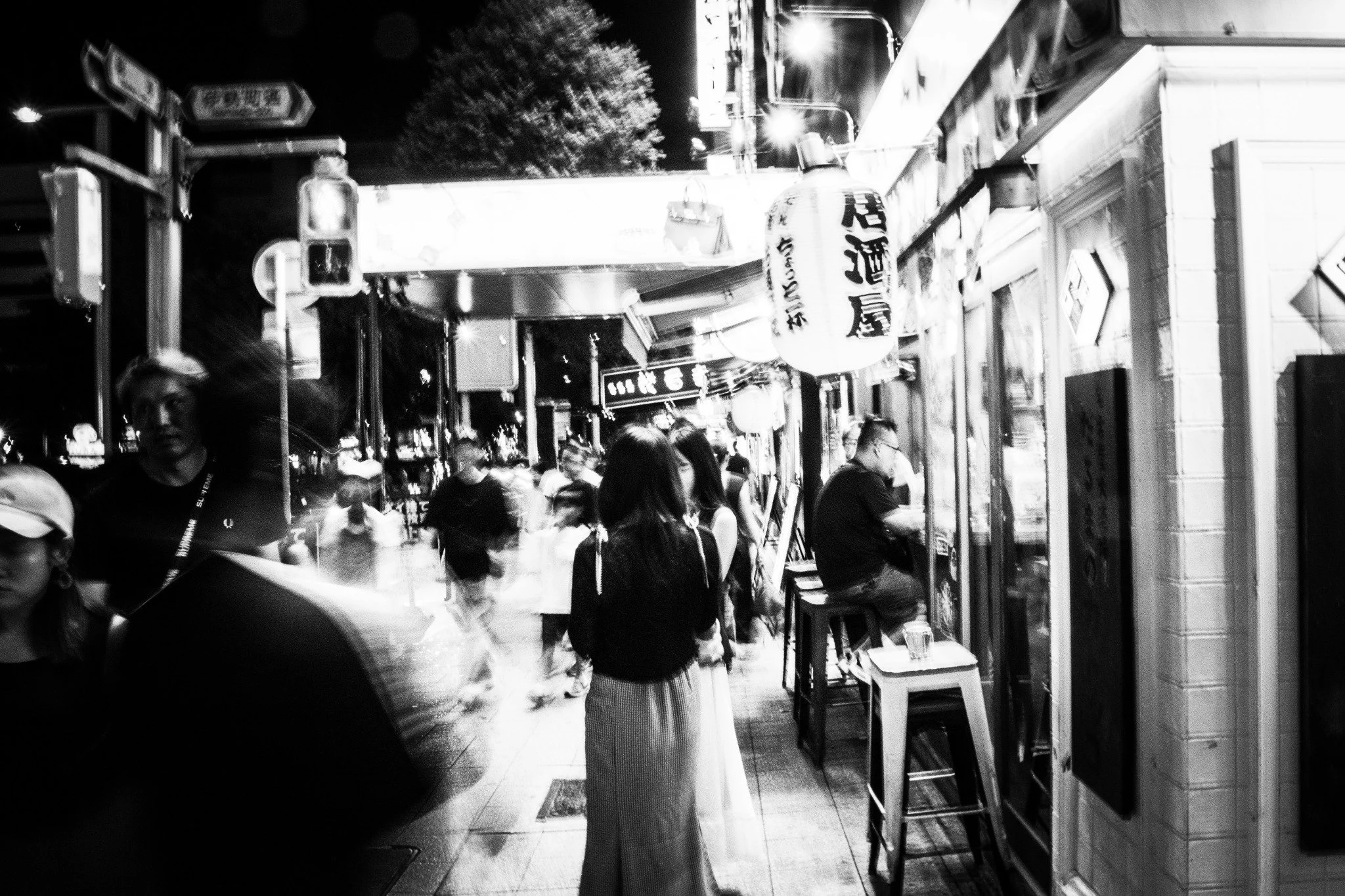
Urban night in Japan: between lights, movement and shared silences.
A documentary reflection on everyday Japan, where silence, movement, work, tradition and solitude coexist within the rhythm of contemporary life.
Living in Japan for many years has made me understand that documentary photography isn't born solely from extraordinary events. Often, it arises from silence, repetition, waiting, and the small gestures that permeate daily life. I don't observe Japan as a photographer who arrived from abroad simply to create a visual work. I also observe this country as a Brazilian resident, as someone who lives within this society and, at the same time, carries a different cultural memory, a different relationship with the street, with the body, with noise, with coexistence, and with public space.
This condition creates a kind of double observation. When photographing Japan, I often make a silent comparison between different worlds: Brazil and Japan, South America and Asia, Japan and Thailand, Japan and South Korea, Asia and Europe. It's not about saying that one place is better than another, but about perceiving how each society organizes its gestures, its silences, its affections, its distances, and its contradictions.
One of the things that most strikes me about Japan is the coexistence of past, present, and future. There is a constant search for the preservation of something old, even within an extremely technological society. Japan seems to move forward with futuristic equipment, modern structures, precise trains, large shopping centers, factories, offices, and multinational corporations, but it still preserves temples, castles, rituals, small farms, quiet residential neighborhoods, and a very strong connection to memory.
This contradiction is visually powerful. In cities like Nagoya, Osaka, Tokyo, or Yokohama, it's possible to be surrounded by buildings, stations, industries, and skyscrapers, and, just minutes later, find small rice paddies, grape orchards, persimmon orchards, or family gardens within urban areas. These are small spaces, often only a few meters, but carefully cultivated with mini-tractors, small agricultural machines, and an organization that reveals a profound relationship between city and land. This coexistence between family farming and the large metropolis is one of the most interesting images of contemporary Japan.
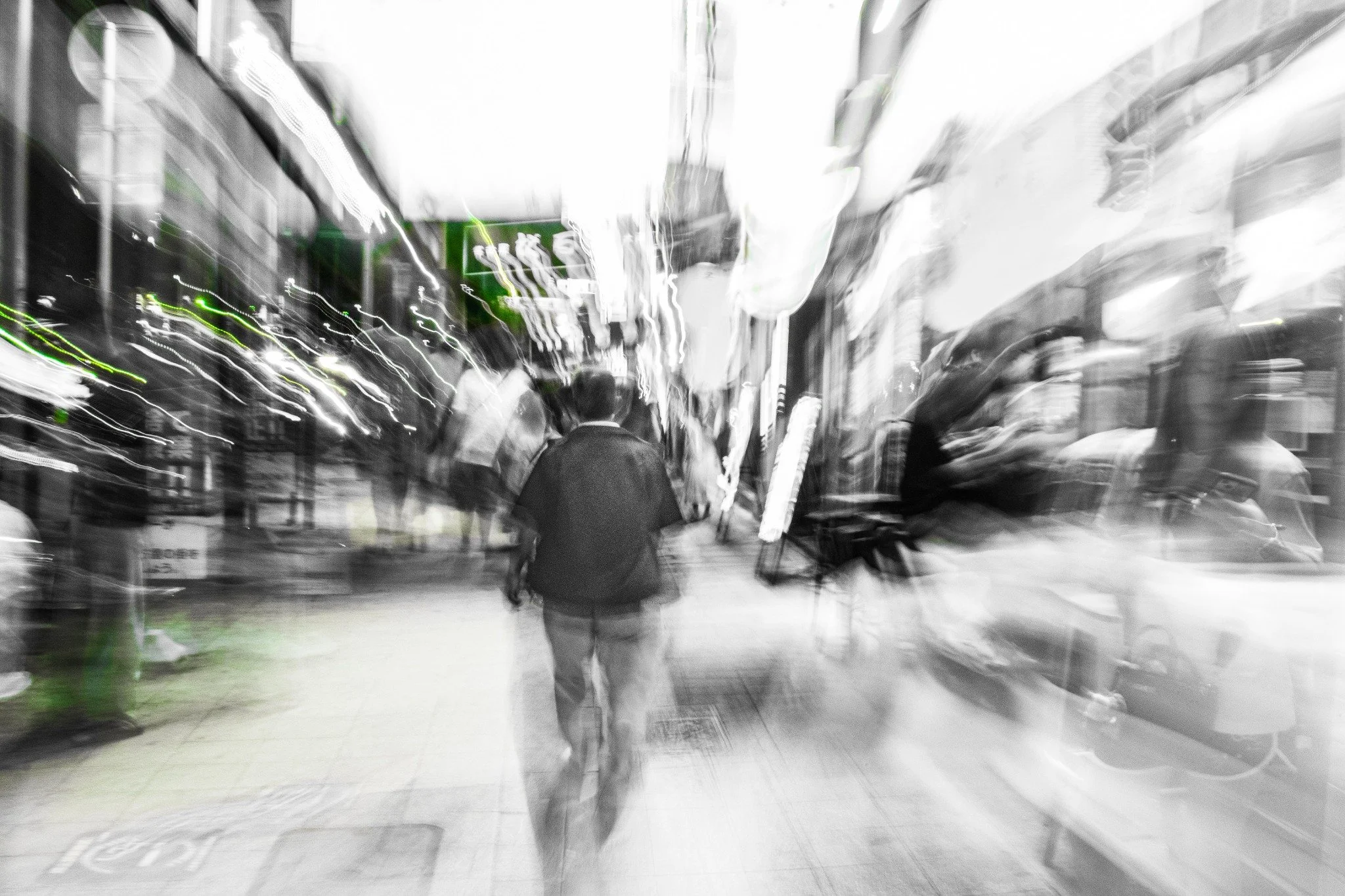
The city dissolves into light, movement, and passage.
I'm also very interested in silence. Not just external silence, but the silence embedded in people. A silence that appears on trains, in stations, in restaurants, in queues, at individual counters, in tired bodies returning home. Sometimes this silence can seem like discipline. Other times, it can resemble a feeling of loneliness, sadness, or exhaustion. For me, as a documentary observer, this point is very impactful.
Over time, I realized that Japanese discipline cannot be understood solely as an individual choice. It is linked to a very strong moral, social, and cultural structure. There is a constant concern about not disrupting the group's harmony, not causing discomfort, not standing out, not failing publicly. This pursuit of conformity creates an extremely organized society, but it can also produce silent pressure on the individual. The fear of being excluded from the group, of not meeting expectations, or of breaking a certain behavioral pattern seems to be present in many everyday gestures.
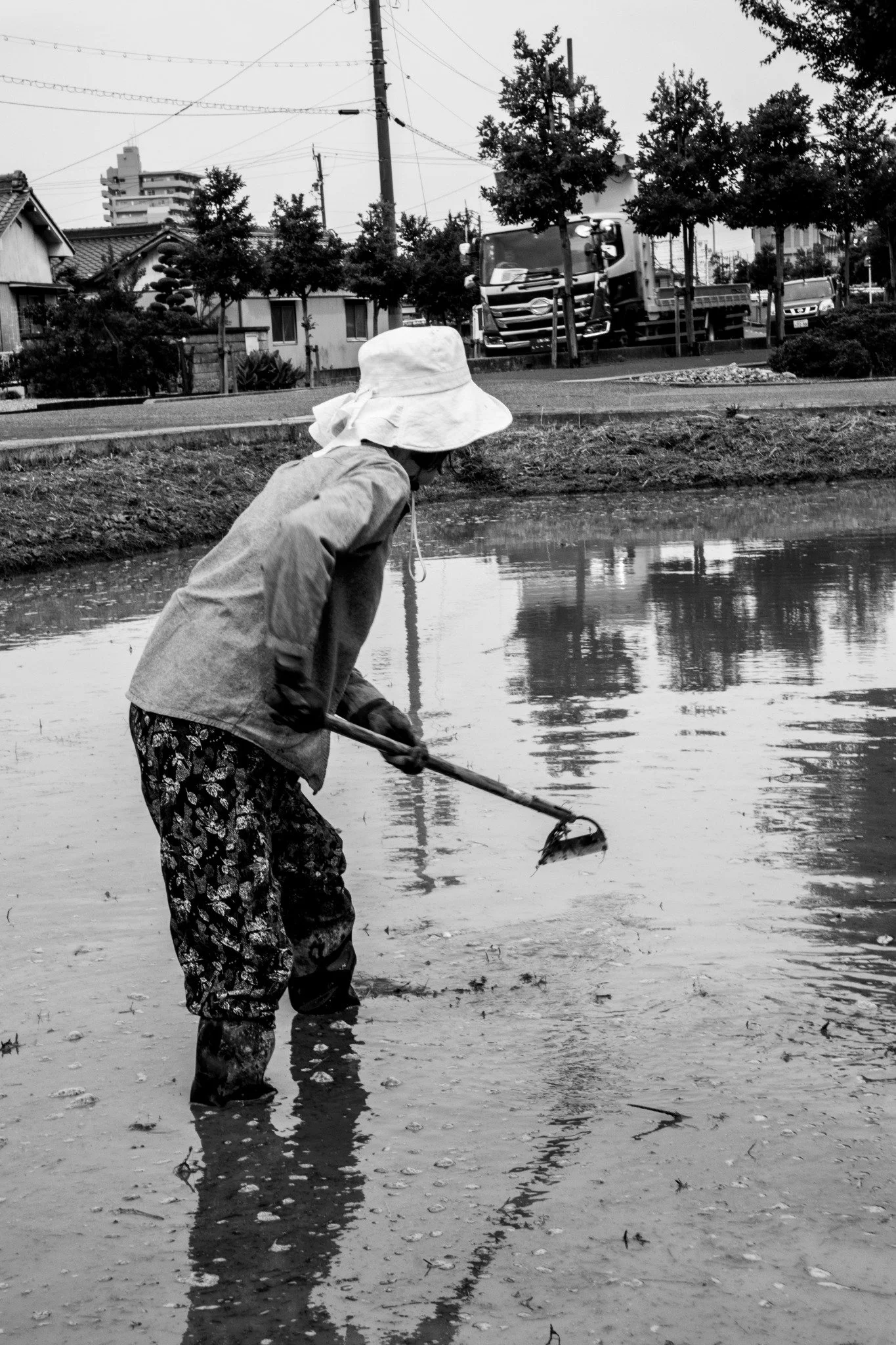
Between the metropolis and the soil, rural memory continues to shape everyday Japan.
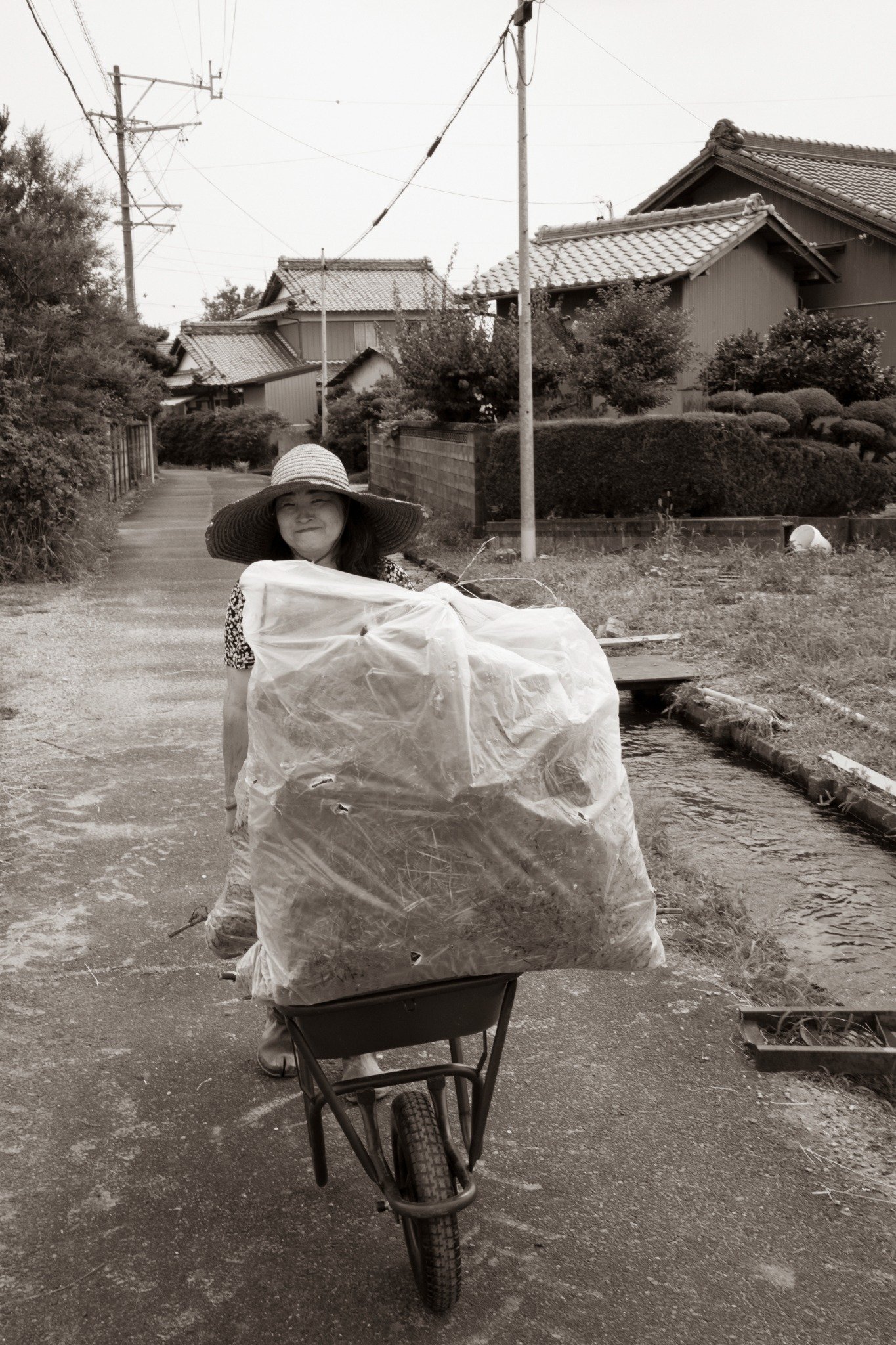
Between the metropolis and the soil, rural memory continues to shape everyday Japan.
In large cities, this logic appears very strongly. There are different urban tribes, different groups, styles, and behaviors. They occupy specific neighborhoods, regions, and sectors of the city. During the day, they seem like separate worlds. But at the end of the day, many return to the same point: the train station. The station is where everything begins and where everything ends. It is the place of departure, of return, of waiting, of exhaustion, and of repetition.
The train, for me, is one of the great documentary images of Japan. Inside it, loneliness becomes collective. People are side by side, very close physically, but almost always emotionally distant. Some sleep from exhaustion, leaning awkwardly against each other. Others are immersed in their cell phones, headphones, games, messages, videos, or some content that isolates them even further from their surroundings. There is a crowd, but there is also a kind of individual isolation.
This solitude also appears in restaurants. In Japan, it's common to find individual counters where people eat alone, read, listen to music, watch something on their phones, or simply remain silent. I don't necessarily see this as a negative thing. There's a freedom in the possibility of being alone without being bothered. But, at the same time, there's a very strong image of a society where the presence of others doesn't always mean coexistence.
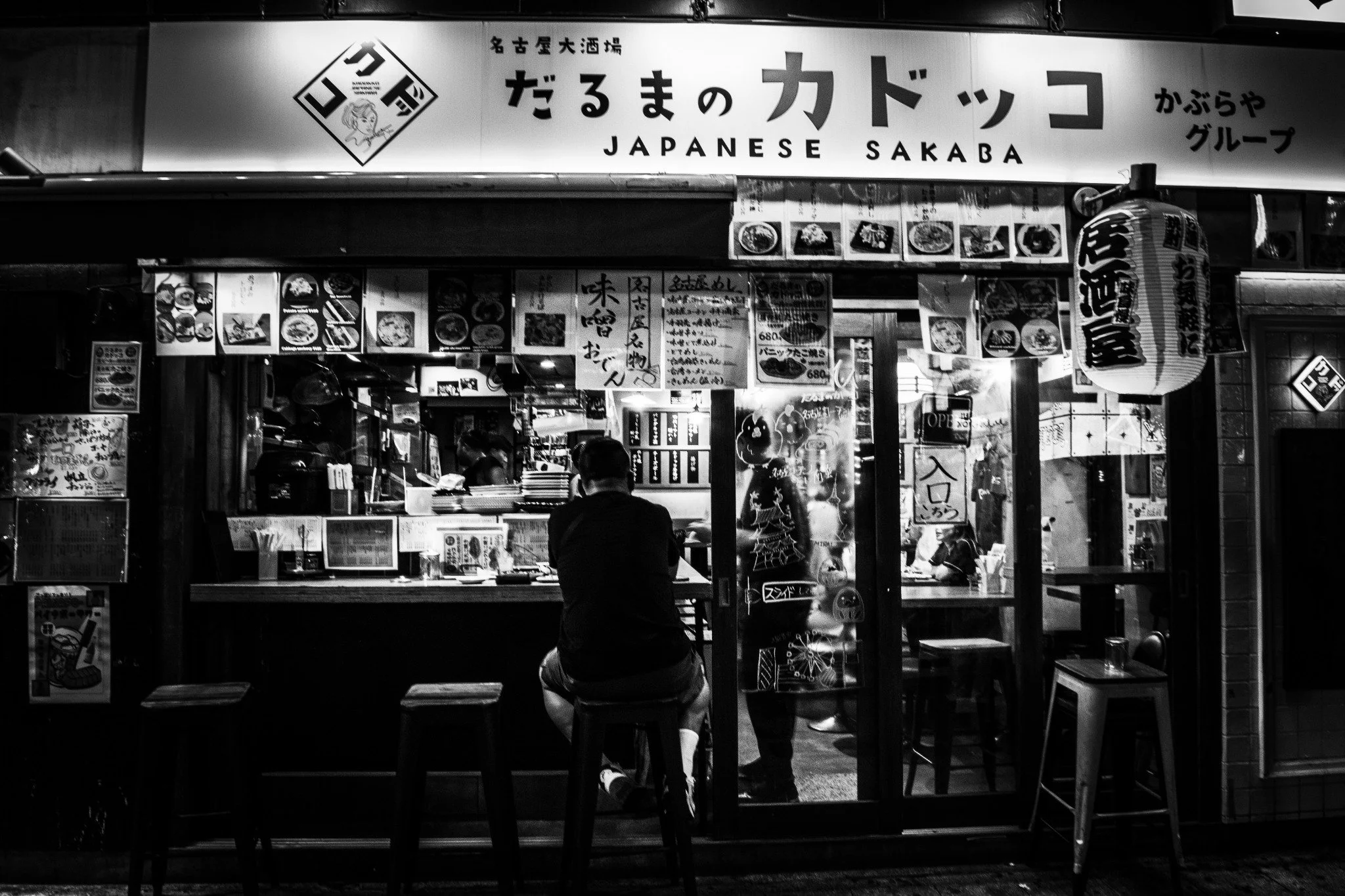
Between the counter and the street, solitary presence is also part of everyday Japanese urban life.
Documentary photography allows me to observe these layers without needing to give a definitive answer. My interest is not in producing a tourist image of Japan, nor in reinforcing stereotypes about organization, technology, or tradition. What interests me is the human tension behind these images: the tired worker, the person alone at the counter, the body standing still at the station, the arriving train, the moving crowd, the rice field next to the city, the temple surrounded by buildings, the preserved castle within a modern metropolis.
Photographing Japan, for me, is about photographing the coexistence of silence and movement. It's about observing a society that preserves the past, lives intensely in the present, and uses technologies that seem to point towards the future. It's about perceiving that behind the order, there is weariness; behind the precision, there is fragility; behind the crowd, there is solitude; and behind modernity, there is still an ancient memory trying to remain.
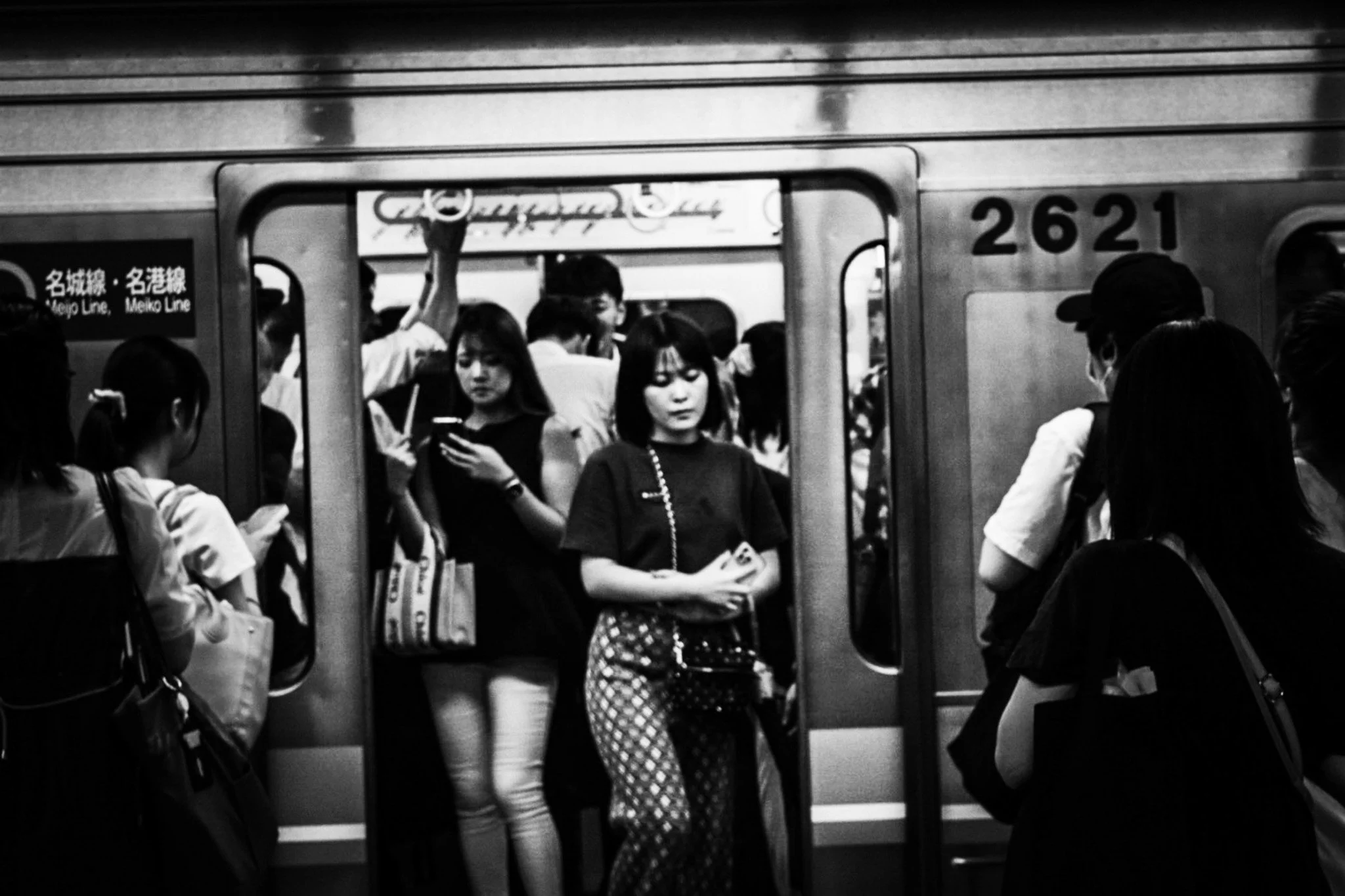
On the train, the crowd draws physically close, but each body remains within its own silence.
Perhaps that's precisely where documentary photography finds its strength: not in fully explaining a society, but in revealing its visible and invisible contradictions. In Japan, these contradictions are in the streets, on the trains, in residential neighborhoods, in the small fields between buildings, at festivals, in stations, and in the silences that each person carries within themselves.
It is in this space between the movement of the city and human silence that I construct part of my documentary perspective.
