
Dubai, Between
Showcases and Crossings
Dubai is often seen through the image of luxury, monumental architecture, and extreme verticality. In this essay, the city appears through another path: in the souks, in the metro, in the crossings along the creek, in the signs, in faces marked by labor, and in bodies moving between commerce, transportation, and survival. In black and white, the photographs bring monument and everyday life closer together, window and shadow, tradition and urban system. The series observes a less touristic Dubai, where migrant workers, consumers, mannequins, boats, and structures of control compose a complex social landscape, shaped by movement, contrast, and human presence.
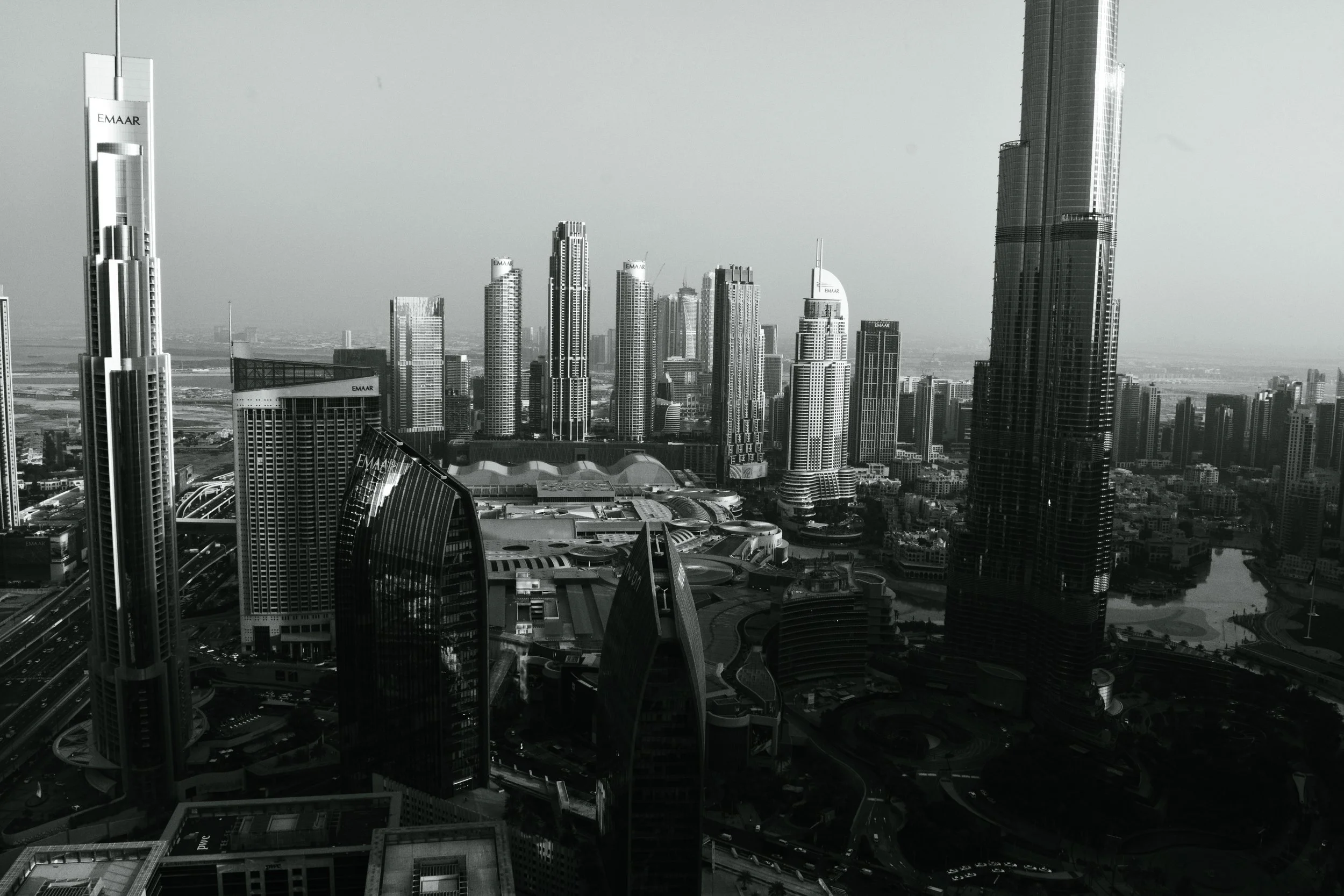
The City Seen from the Window
Seen from the Sky Views Observatory, facing the Burj Khalifa, Dubai appears as a city built through scale, verticality, and the repetition of towers. The image opens the essay through the city’s most recognizable face: a monumental, planned, and spectacular Dubai. In black and white, the tourist shine gives way to a colder and more structural reading, where architecture seems to organize the distance between power, consumption, and everyday life. From this elevated view, the portfolio descends into other layers of the city: the souks, the metro, the crossings, the workers, and the less visible spaces that sustain the urban landscape.
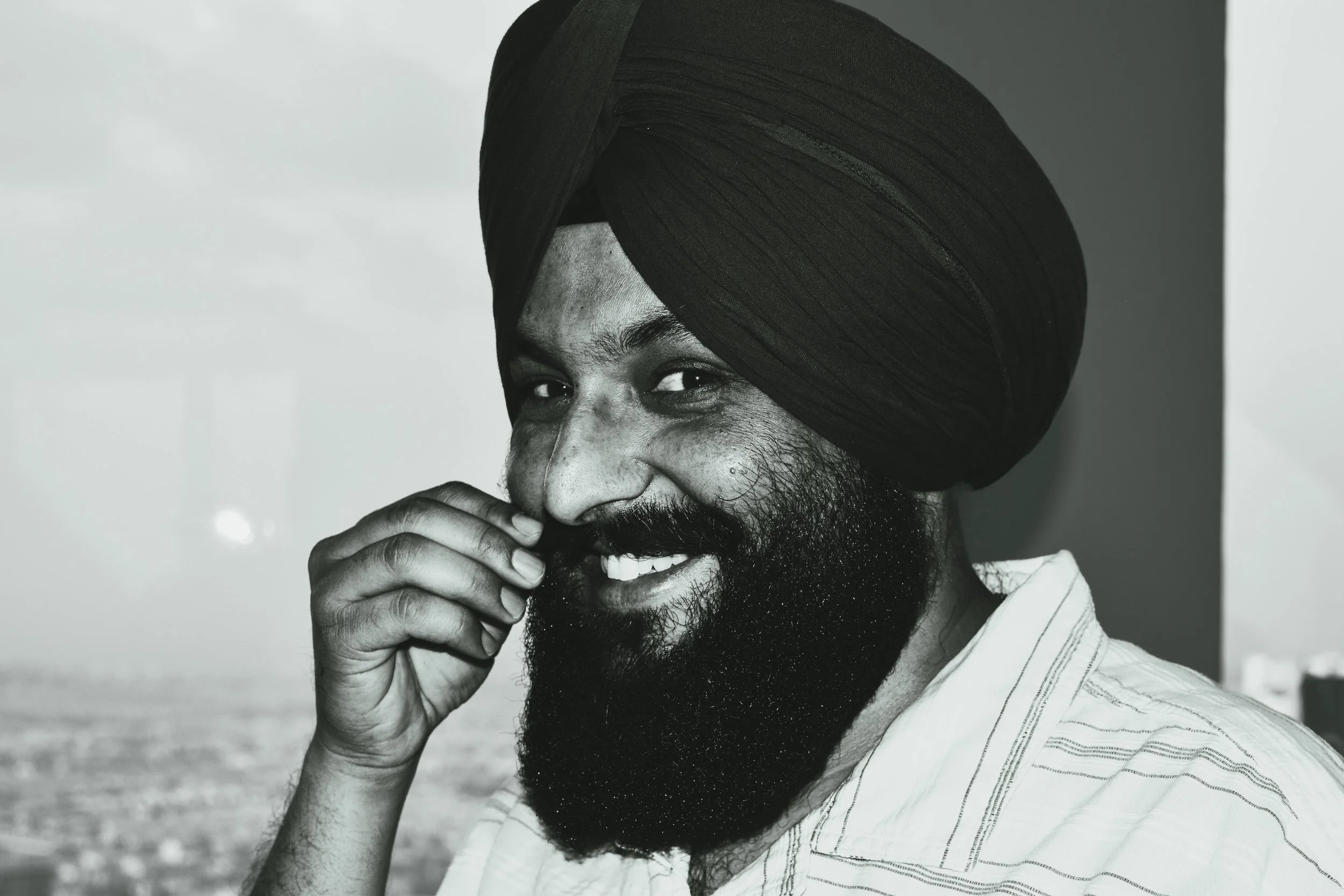
Above the City
At the observatory, facing Dubai’s vertical landscape, the portrait introduces a human presence within a city shaped by scale, international movement, and monumental architecture. The calm presence of the subject contrasts with the coldness of the towers and opens the essay from a space associated with encounter, mobility, and the act of looking at the city from above. From this image, the portfolio shifts toward other layers of Dubai, where commerce, labor, crossings, and urban structures reveal a city far more complex than its image of luxury.
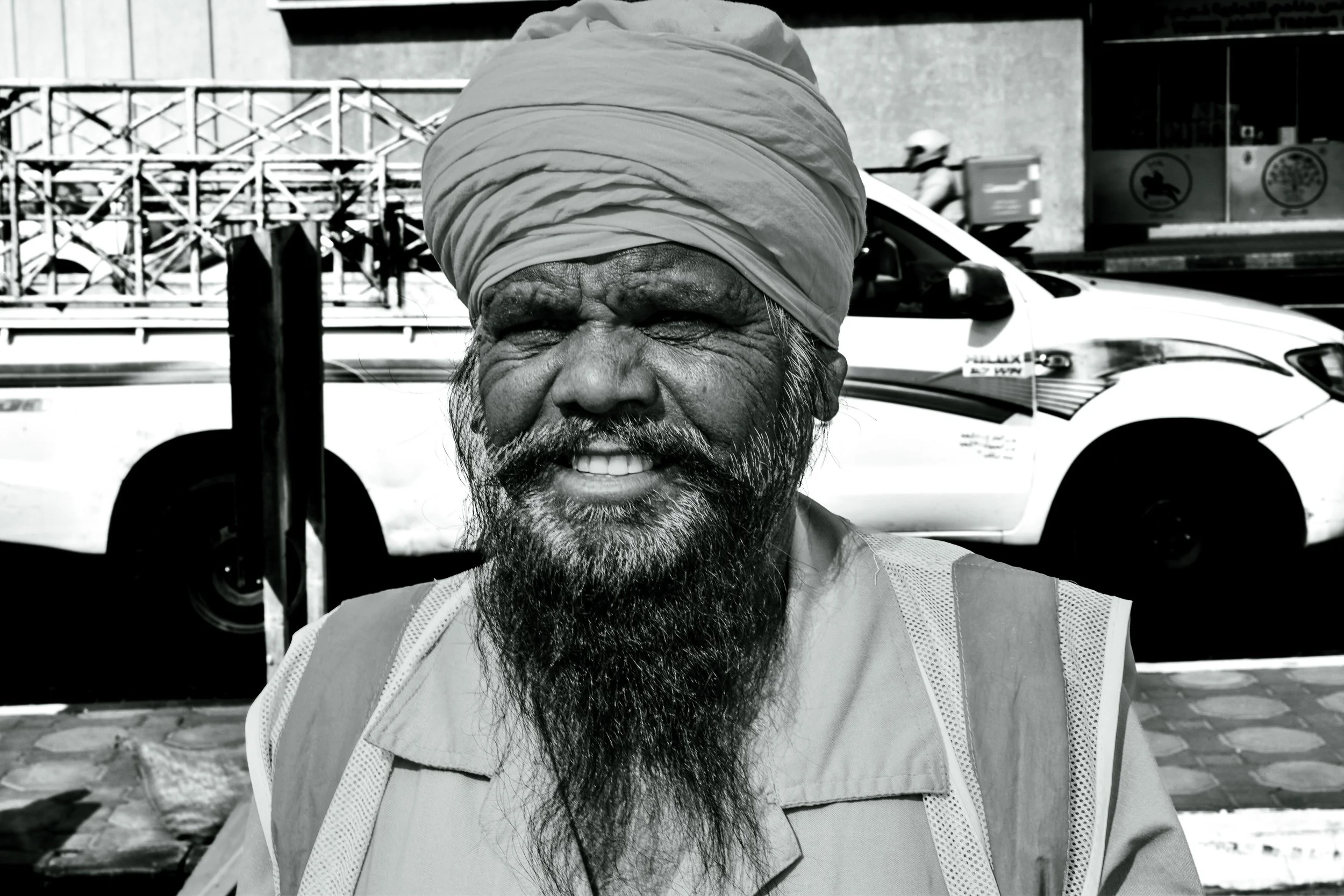
At Street Level
Far from the observatories and the monumental skyline, this portrait brings the essay down to street level. The face marked by sun, age, and labor reveals one of Dubai’s essential presences: the migrant worker who sustains the city in its daily rhythm. The image does not seek to exoticize the subject, but to observe the social distance inscribed in the body itself. In a city associated with luxury, speed, and extreme architecture, this face gives the portfolio a concrete dimension: that of someone briefly made visible, while often remaining in the least recognized spaces of the urban landscape.
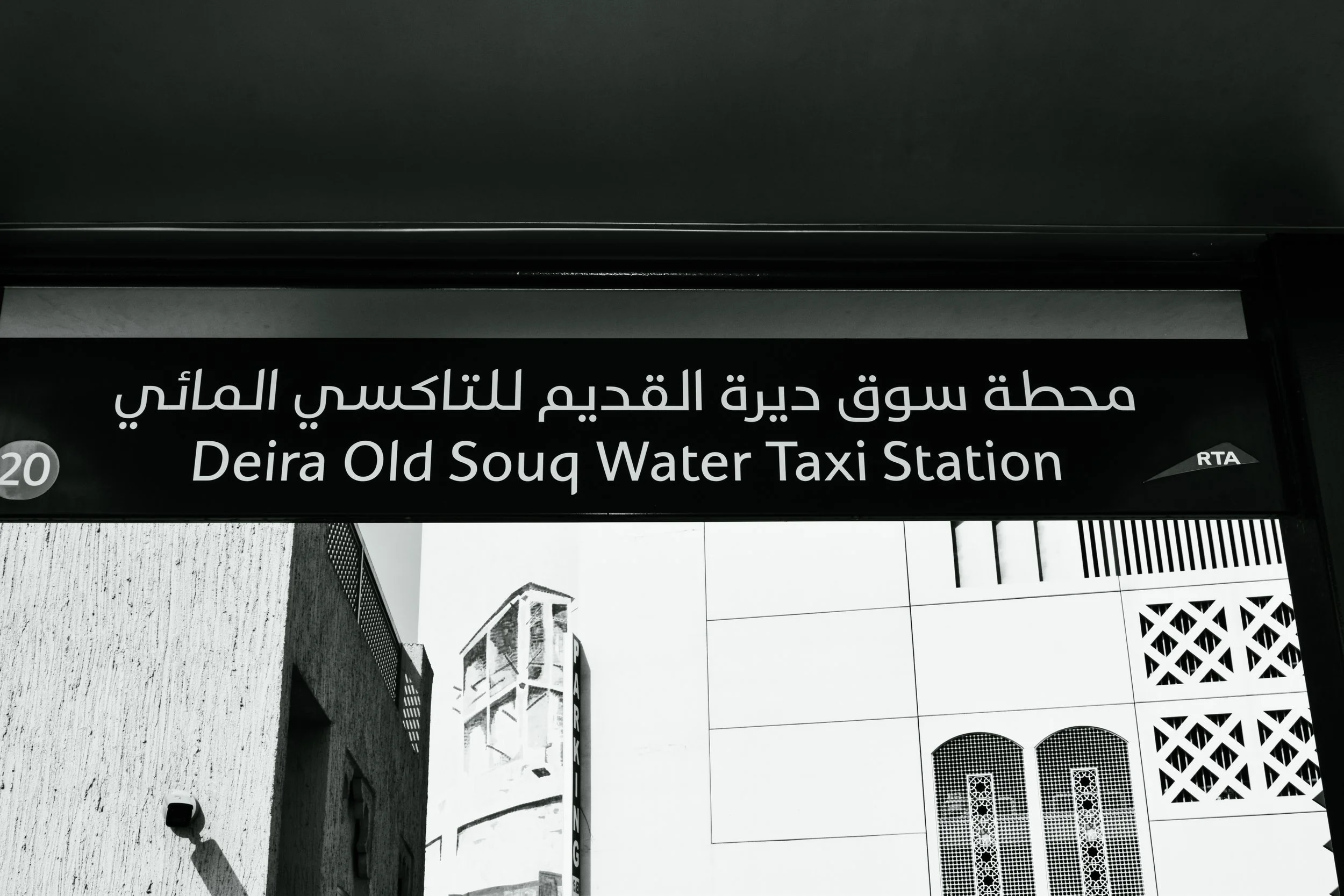
Crossing Point
The water transport station sign shifts the essay from the individual portrait to Dubai’s urban structure. After the elevated view, the spaces of business, and bodies marked by different social positions, the image points to the level of everyday circulation: the water, the souk, the crossings, and the routes used by workers, merchants, residents, and visitors. Here, Dubai is no longer only a vertical landscape. It becomes a system of movement, commerce, and survival.
Matter of the Souk
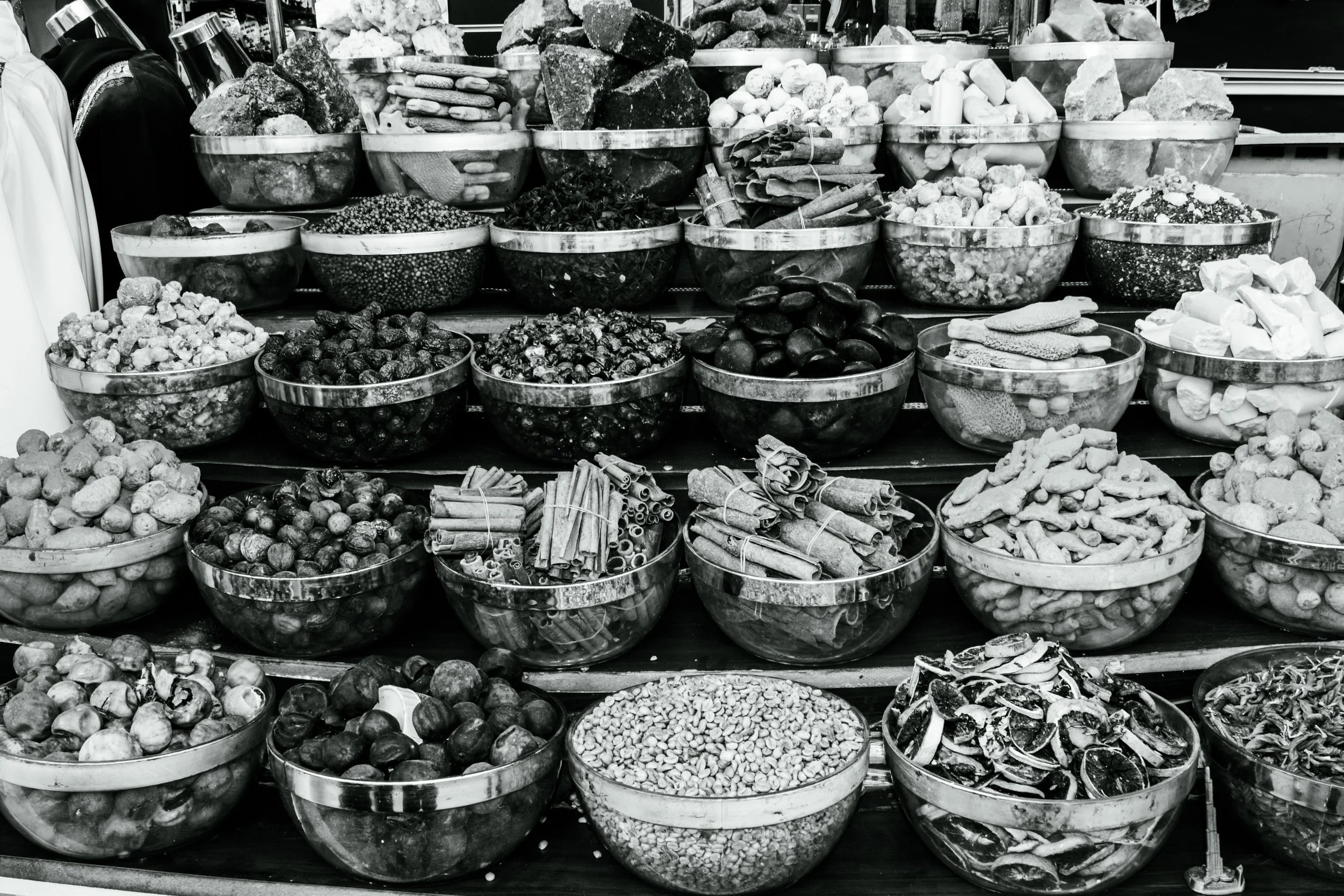
Inside the souk, the spices occupy the image as matter, commerce, and a memory of circulation. The photograph brings Dubai closer to a less monumental and more everyday dimension, connected to exchange, the senses, and the labor that sustains the city’s commercial life. After the towers, the observatories, and the crossings, the essay enters a territory where the city is revealed through the texture of goods, the arrangement of market stalls, and the persistence of commercial practices that predate Dubai’s globalized image.
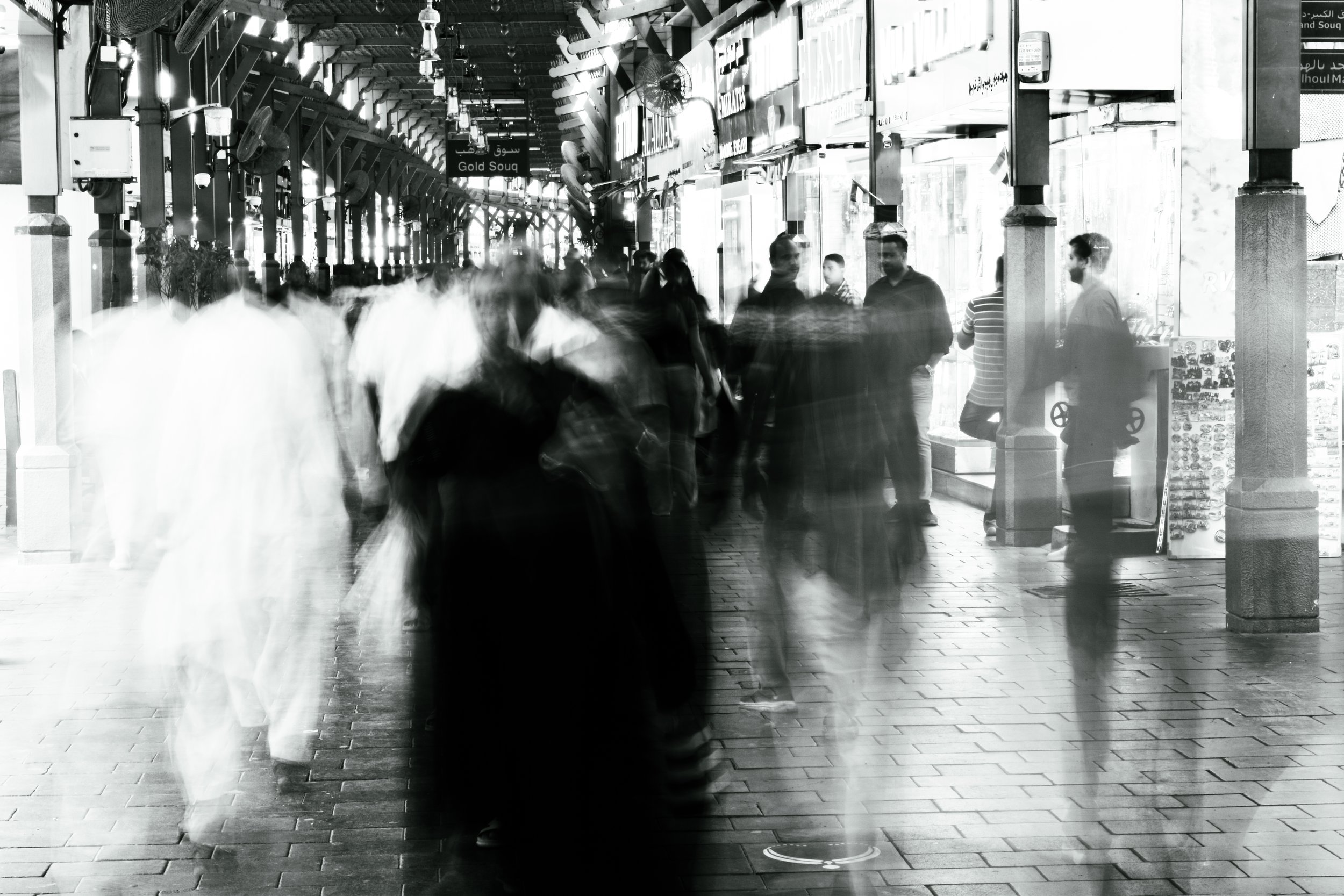
In the corridor of the souk, bodies appear in motion, crossing the space between goods, storefronts, and lights. The long exposure turns everyday circulation into a visual trace, revealing a Dubai that is less fixed and less monumental. Here, the city is understood through movement: workers, consumers, and visitors occupy the same space, but not necessarily the same condition. The photograph presents the popular market as a place of passage, survival, and encounter.
Flow in the Souk
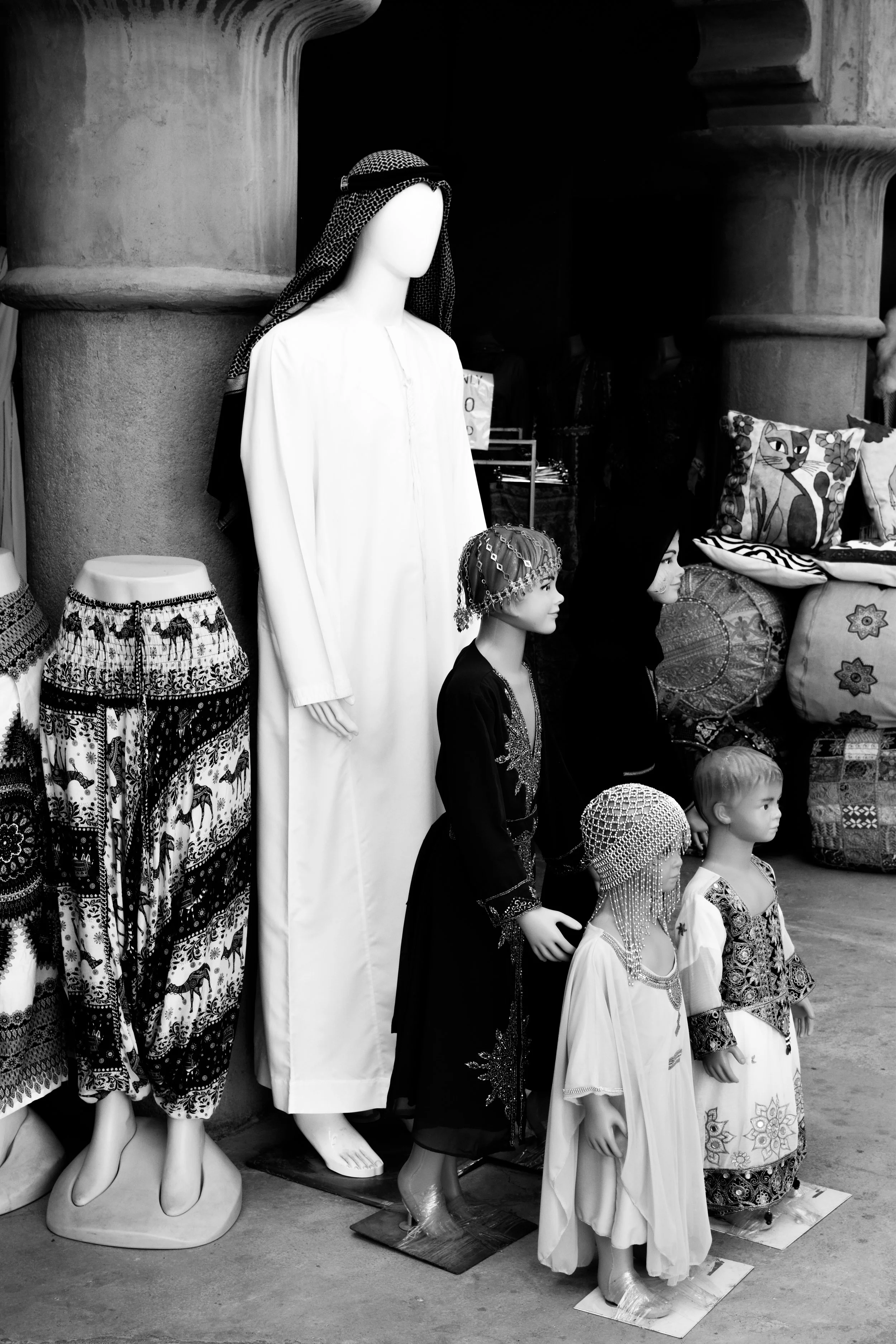
In the storefront, the mannequins organize an idealized representation of family, clothing, and social roles. The image observes how commerce also produces symbols of belonging, behavior, and order. In Dubai, where tradition, consumption, and globalization coexist in tension, this scene reveals more than garments on display: it shows a visual structure of values, gender, and family presented to public space as a model of normality.
Family on Display
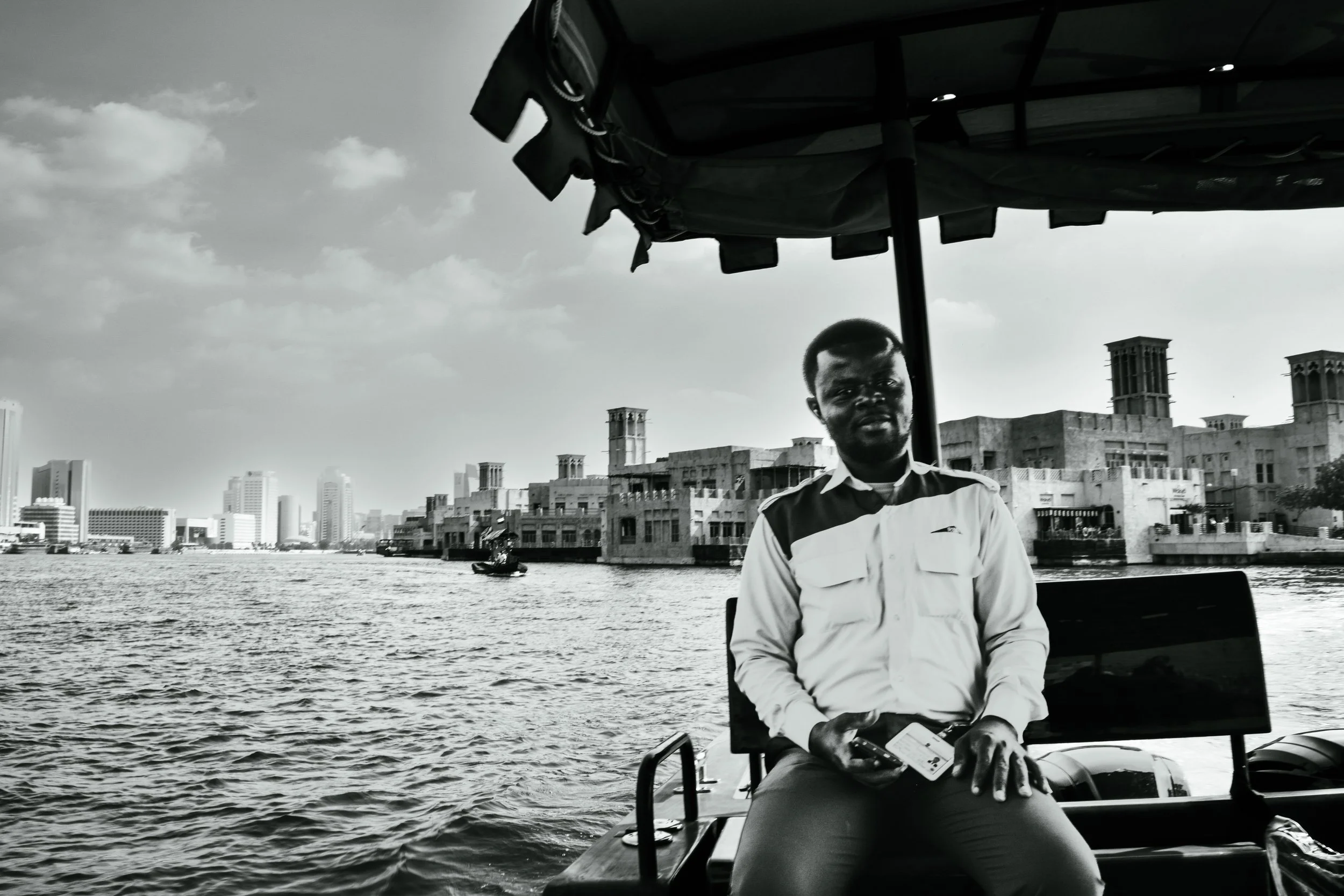
Set against Dubai’s architecture, the worker becomes the central presence of the image. The badge, the posture, and the visible fatigue shift the photograph away from the tourist landscape and toward the reality of those who sustain the city’s daily rhythm. In the background, architecture remains a symbol of growth and international visibility. In the foreground, the body reveals another dimension of Dubai: migrant labor, endurance under the heat, and a human presence that rarely occupies the center of the public narrative.
Labor Before the Skyline
Family on Display
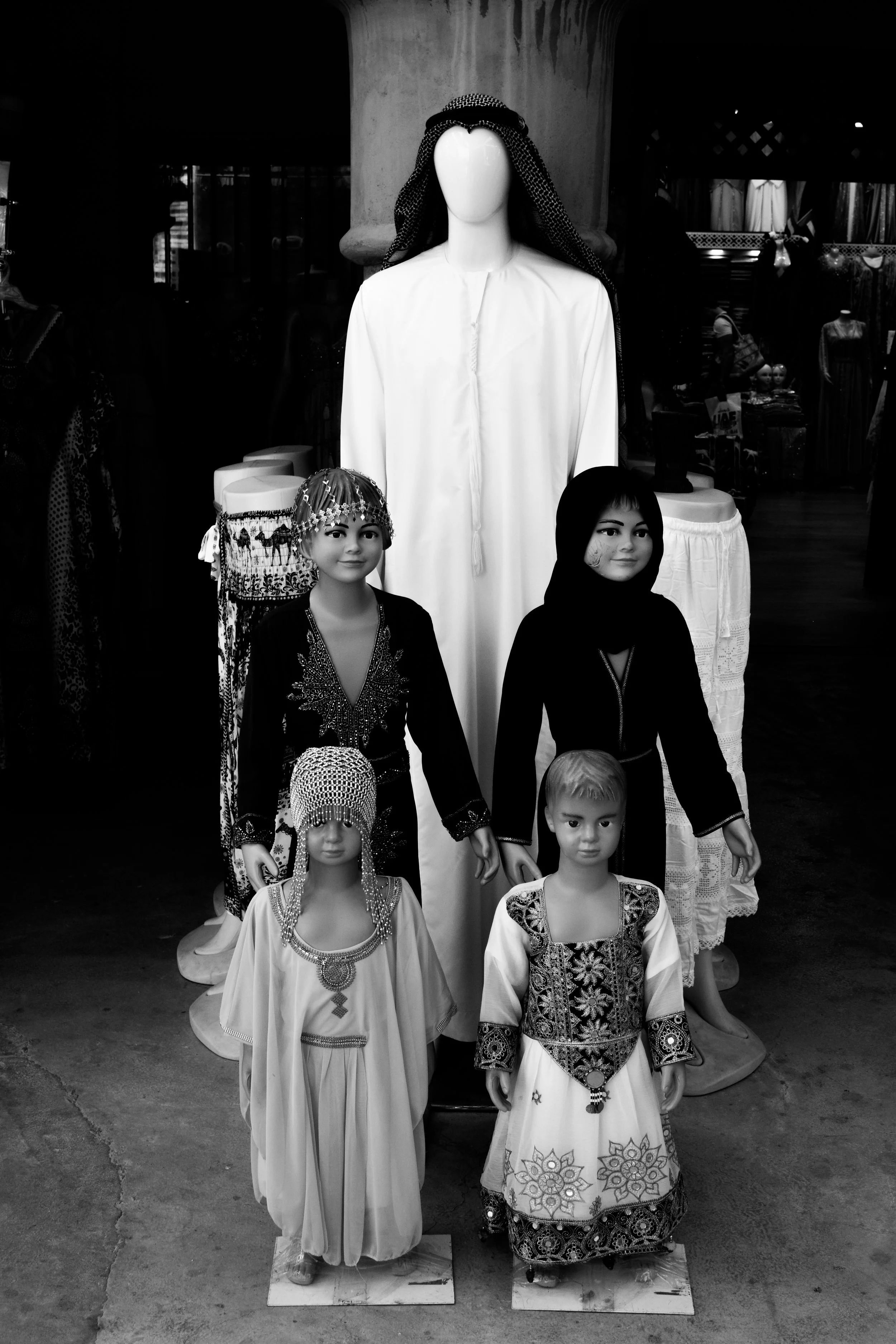
In the storefront, the mannequins organize an idealized representation of family, clothing, and social roles. The photograph observes how commerce also produces images of belonging, behavior, and order. After the real body of the worker, this scene presents artificial bodies used to communicate social values to public space. In Dubai, tradition, consumption, and globalization appear together in a visual structure of family, gender, and normality.
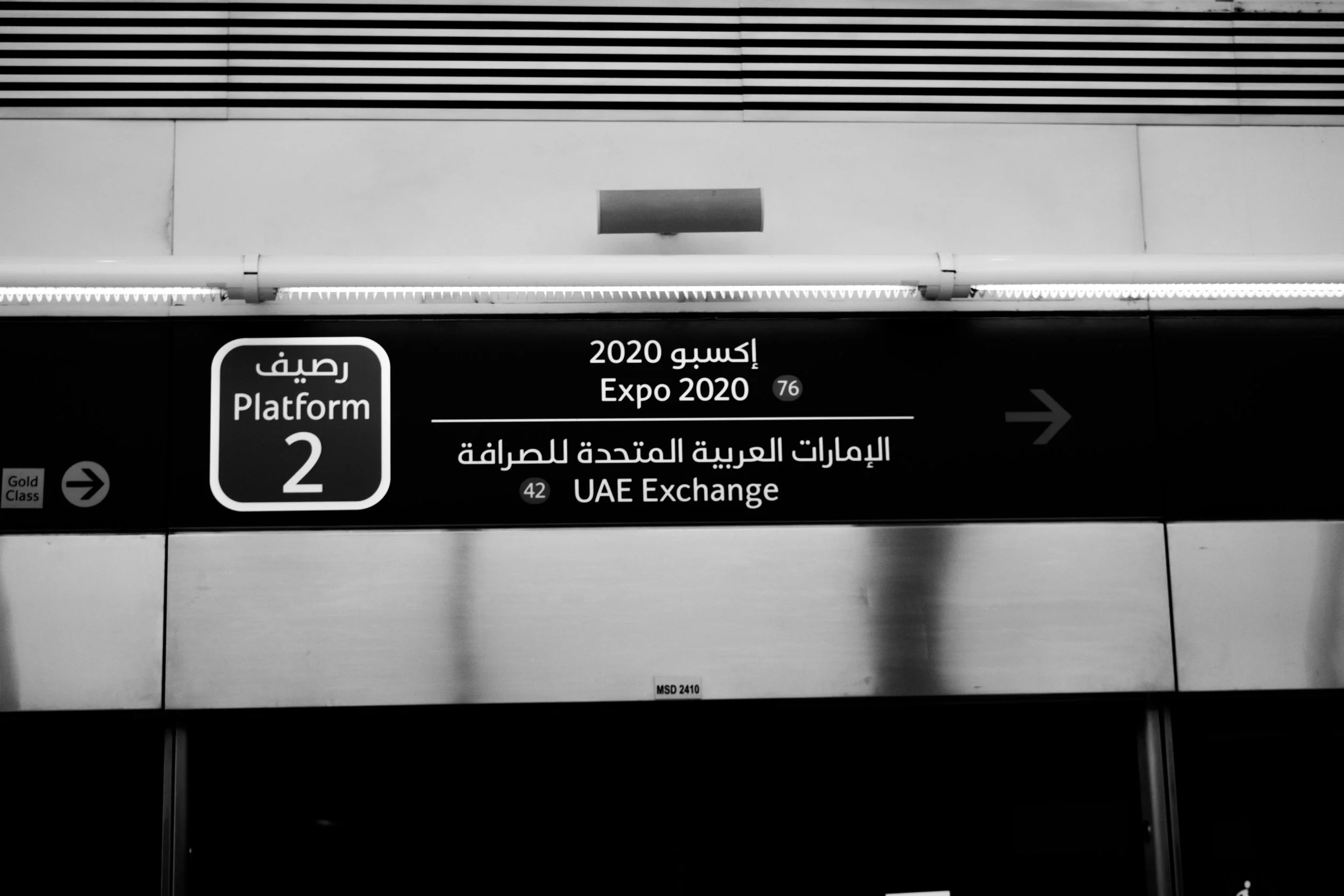
The station sign closes the essay by pointing to Dubai as a system of circulation. After the portraits, the souk, the storefronts, and labor, the image returns to the infrastructure that organizes the city: direction, access, transport, control, and movement. The metro appears as part of a network connecting areas of consumption, work, and crossing. The photograph closes the portfolio without a central human figure, leaving the urban structure itself as the synthesis of the city observed.